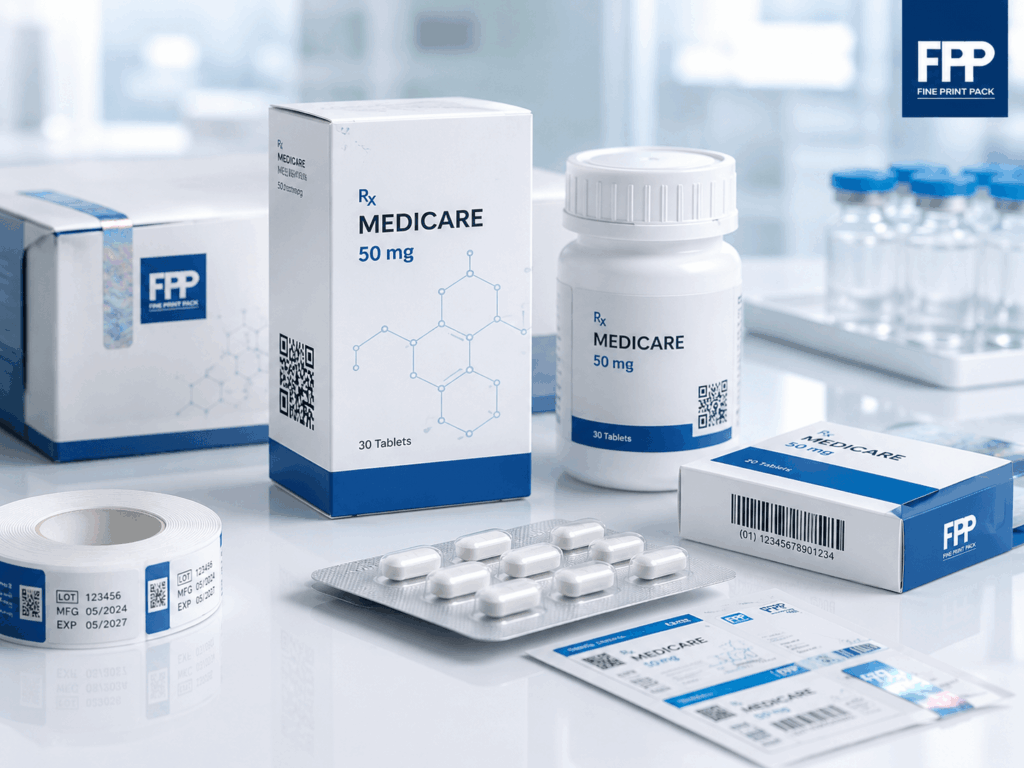
In pharmaceutical packaging, printing isn’t “just printing.” It’s a controlled process that sits right at the intersection of patient safety, regulatory compliance, brand integrity, and supply continuity. A minor mistake on a carton, leaflet, label, or foil can trigger a hold, a reprint, a missed launch, or worst of all, a compliance risk.
That’s why the difference between smooth delivery and chaos is rarely the press itself—it’s project management.
When print projects are managed well, teams move faster with fewer approvals, fewer deviations, and fewer last-minute “please fix this urgently” escalations. When they’re not, even a simple label change can become a multi-week delay.
This blog breaks down pharma print project management from a practical angle: what needs to happen, in what order, and why it matters.
Why pharma printing needs stronger project management than other industries
Pharmaceutical print has unique realities:
- Regulated content: dosage instructions, warnings, batch/expiry zones, barcodes, serialization elements, and mandated text.
- Change control: even small edits often require documentation, approvals, and traceability.
- High cost of error: one misprint can mean quarantined stock, recall risk, or market withdrawal.
- Tight launch timelines: marketing, regulatory, production, and supply chain all depend on packaging readiness.
- Multiple stakeholders: brand, QA, regulatory, procurement, packaging development, and the printer—sometimes in different countries.
A pharma print PM (project manager) exists to keep all of that aligned, documented, and on schedule.
The core role of a print project manager in pharma
Think of the PM as the “single throat to choke” (in a good way). Their job is to ensure:
- The correct artwork is used (no version confusion)
- The required approvals are captured and traceable
- The process follows the agreed specs (materials, finish, print intent)
- Risks are identified early (before plates/production)
- Timelines are realistic and monitored
- Deviations are handled professionally with containment actions
In pharma, good PM is not a “nice to have.” It’s a control mechanism.
Step-by-step: The pharma print project workflow (with PM checkpoints)
1) Project kickoff and scope lock
A good project starts with a clean brief. This isn’t just “print 100,000 cartons.”
The PM confirms:
- Pack type: carton, label, leaflet, blister foil, shipper, insert
- SKU(s), strengths, languages, markets
- Quantity and delivery split (single vs phased deliveries)
- Material and finish requirements (board GSM, varnish, matte/gloss, adhesives)
- Mandatory compliance elements (barcodes, data matrix, warnings)
- Timeline expectations + critical dates (launch / production start)
PM output: a simple one-page project sheet that becomes the reference point for everyone.
Pharma teams work in versions: Regulatory revision, market update, claim change, layout update, and so on.
The PM enforces:
- One “master” file per SKU
- Version naming discipline
- Only approved files move forward
This is where many reprints begin: someone shares a “final_final2” file and it gets mistakenly used.
PM checkpoint: confirm the file is clearly marked “Approved for print” and matches the latest change request.
3) Preflight checks (content + structure)
Pharma printers typically do structured checks before production. The PM coordinates this and ensures issues are resolved early.
Key checks include:
- Missing or unclear text
- Incorrect hierarchy (strength, dosage form, route)
- Barcode placement and scannability
- Safety margins around cut/fold
- Legibility of small text
- Space planning for batch/expiry overprint
- Pack structure fit (dieline accuracy)
This isn’t about “design taste.” It’s about preventing downstream failures.
PM checkpoint: capture a preflight report and close points systematically.
4) Color and material expectation alignment
In pharma, visual consistency matters, but the bigger issue is repeatability and readability.
The PM aligns:
- Material selection and availability
- Print process suitability
- Any special finishes that could affect scanners or overprinting zones
- Brand color expectation (without overpromising)
Important pharma reality: certain finishes can interfere with barcode scanning or smudge resistance if not managed correctly.
PM checkpoint: confirm “print intent” expectations in writing before proofing.
5) Proofing and controlled approvals
Pharma approvals must be unambiguous. The PM ensures there’s no “looks ok” ambiguity.
Proof types may include:
- PDF proof for content/layout verification
- Physical proof or sample where required
- Press-side approval (when critical)
The PM manages:
- Who must approve (Regulatory / QA / Brand)
- What exactly is being approved (version, file name, proof type)
- Written approval trail
PM checkpoint: approval record includes file name, version, date, approver name.
6) Production planning and risk management
Once artwork is approved, production is not “automatic.” The PM coordinates:
- Raw material reservation (board/film/adhesive)
- Scheduling based on machine availability
- Lead time buffers for pharma-critical orders
- Contingencies: backup slots, alternate materials (if acceptable), split shipments
PM checkpoint: a realistic production plan with milestones (print → finish → QC → pack → dispatch).
7) Quality checks and compliance documentation
This is where pharma print PM becomes very different from regular commercial print.
PM ensures:
- In-process inspections are followed
- Sampling plans (as agreed) are executed
- Final QC sign-off before dispatch
- Any compliance documents required are compiled (COC where applicable, internal QC records, batch references, etc.)
If something goes wrong, the PM manages it with discipline: contain, assess impact, correct, document.
PM checkpoint: release only after QC clearance.
8) Delivery coordination and handover
Pharma packaging often supports production schedules, so dispatch timing matters.
PM coordinates:
- Packing method and protection
- Labeling of cartons/shipments to match SKU/batch expectations
- Delivery slots, PO references, and receiving requirements
- Handover notes for repeat orders
PM checkpoint: delivery confirmation + project closure note with lessons learned.
Common failure points (and how PM prevents them)
1) Version confusion
Fix: one master folder, one owner, one approval statement.
2) Late-stage regulatory changes
Fix: clear cut-off dates and a change-control pathway (impact on cost/timeline documented).
3) Barcode or data matrix issues
Fix: treat scannability as a mandatory checkpoint, not a “later” problem.
4) Batch/expiry overprint area not planned
Fix: reserve and protect coding zones early.
5) Unclear approval authority
Fix: define approval roles in kickoff: who approves content, who approves print, who releases.
What buyers should expect from a good pharma print partner
A strong pharma print partner doesn’t just print. They bring process maturity:
- A dedicated project owner
- A structured approval trail
- Proactive checks before production
- Clear timelines and milestone updates
- Professional handling of changes and deviations
- Consistency across repeat orders
This reduces internal firefighting for pharma teams and improves supply continuity.
Final takeaway: In pharma, the project plan is part of quality
Pharma packaging is not forgiving. The most expensive “printing mistake” is rarely ink on paper—it’s the downstream impact on compliance, production schedules, and brand trust.
That’s why the print process needs to be managed like a pharma process: controlled, traceable, and predictable.
When project management is done right, printing becomes what it should be: a reliable link in the supply chain—not a recurring headache.